Overgrown Trees Damage Roofs and Gutters | Home Safety
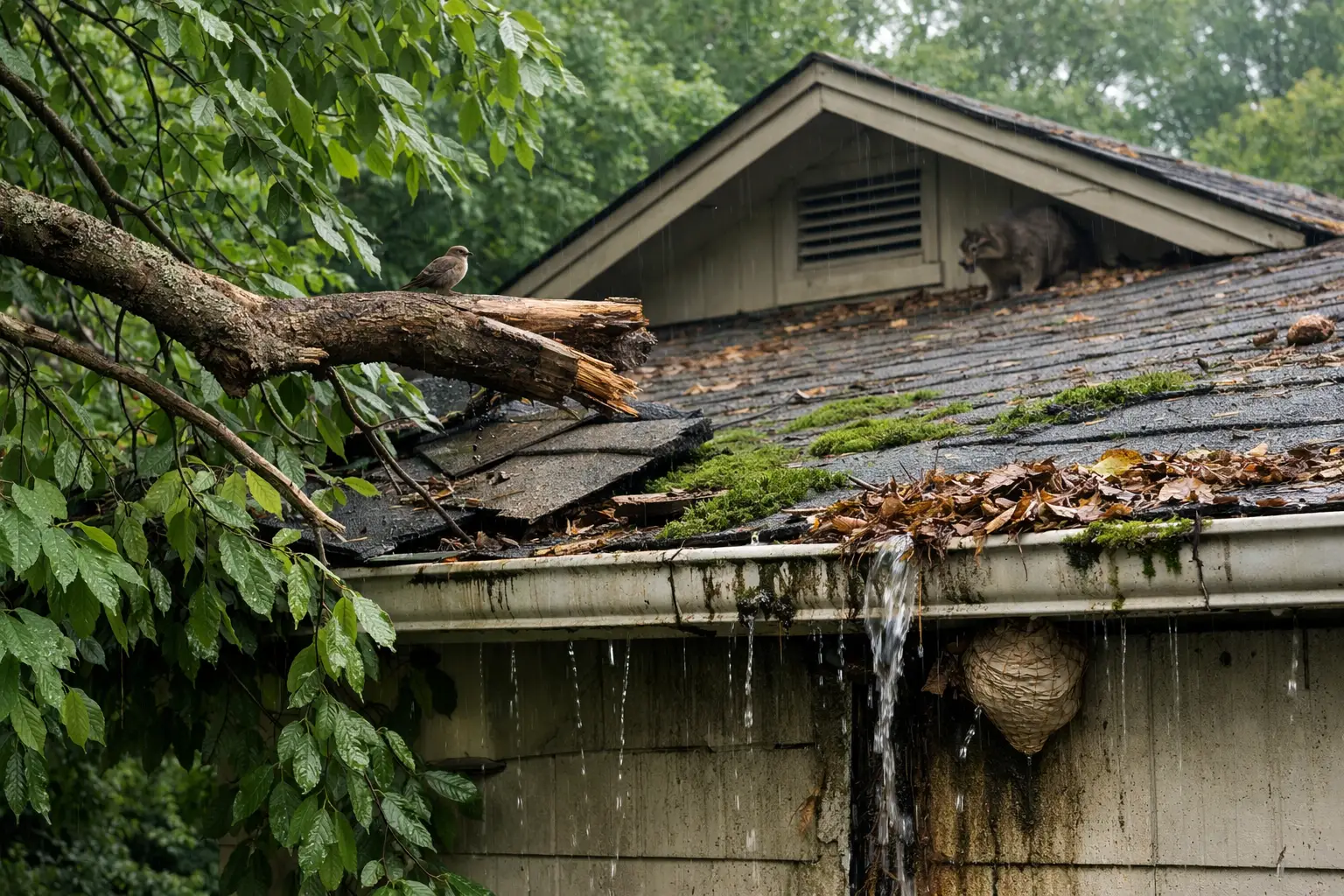
Have you ever seen how branches on a tree are creeping nearer your roof and asking whether it is possible that they will actually damage your home? The trees are attractive to make a house a beautiful place and they offer shady conditions during hot weather, but when they creep out of control, they can silently cause severe problems to your roof and your gutter system. Some hanging branches may become a blockage of gutters, torn shingles, water leakage, and even pests.
Most of the homeowners are interested in what is visible at the ground level and forget to look at the sky. Trees that are not trimmed have their leaves, twigs, seeds and sap falling constantly onto roofs. These materials prevent the flow of water, trap moisture and make the roofing surfaces weak over time. The weak branches may break and cause instant harm in stormy weather. Through knowledge of the risks, you are in a position to act on time to save your property from the needless expenses of repair. We shall further discuss the impact of overgrown trees on your roof and gutters and the need to ensure they are maintained.
1. Branches destroy Roofing Materials
Branches of trees hanging there beat your roof with every wind, as per professional teams. This contact material repeatedly removes protective coating on tiles, shingles and metal sheets. When the surface is weak, it becomes easy to be penetrated by rainwater leading to leakages.
In the storms, the heavy branches may break and fall directly on the roof. The tiniest limbs can break the tiles or bend the metal panels. Such damages are not evident in the short term, yet make the roof weaker and allow water to penetrate the interiors that impacts insulation and ceilings. Maintenance of trimmed branches helps in the avoidance of unnecessary wear and tear.
2. Foliage and Litter Block Gutters
Trees keep dropping leaves, bark, flowers, and seeds. When they fall in gutterways, they clog the water routes through which rainwater is supposed to pass. Water does not drain safely and instead it overflows and accumulates at the edges of roofs.
Filled up may rot fascia boards, stain walls, and may even seep into the foundation of your house. In cooler or damper climates, standing water also promotes the growth of mould and mildew. Obstructed gutters can be described as one of the most frequent problems that overgrown trees bring about, and they usually create much larger structural problems when they are not taken care of.
3. Humidity Promotes Fungal and Algal Growth
Growing trees also forms a shade, preventing sunlight from drying your roof as it should be. Moss, algae, and mould start growing when moisture is deposited, such as on roofing surfaces.
These organisms are even more effective capturers of moisture and they gradually destroy roofing substances. In the long run, this deteriorates the tile and shingles and reduces the roof’s life. The mould may also penetrate into gutters and down-pipes whereby it influences the water flow and the quality of air. To have a healthy roof, it must have adequate sunlight exposure and ventilation.
4. Hanging Trees Become Inviting to Pests
Branches that come into contact with or lie over your roof serve as natural pest bridges. Rats, squirrels, birds, possums, and insects are able to easily climb your roof and get to your attic.
Inside, the pests strip the wires, destroy insulation, stuff gutters with nest and pose hygienic issues. Gutters are prone to blockages by birds nesting in them. The more distant the branches to your roof, the fewer means of getting to your roof, and the fewer people who have no place in your home will be able to approach your home.
5. Debris is the Cause of Gutter Deterioration
In the cases where the leaves and twigs accumulate in the gutters, they eventually form thick sludge. This damp substance causes a strain and pressure on the gutter system. Gutters begin to sag, brackets become loose and joints begin to part over time.
Free metal gutters that are in constant exposure to moisture and rotting organic substances wear out more quickly. Neglected gutters can have to be replaced much sooner than they would last many years. Excessive trees raise the quantity of debris, causing faster gutter destruction and higher repair.
6. Roots Interfere with Drainage Foundations
Although the roots do not extend to the roof of your house, they do affect drainage near your house. Megafauna trees absorb water and change the structure of soil. They have roots that can disrupt the underground pipes and move the soil which supports the drainage systems.
In a case of disruption in drainage, the rainwater will accumulate around the base of your home rather than draining off. This may result in wet walls, fissures and structural stress in the long term. Correct tree planting and care will assist in ensuring that your gutter system is in good operation at the top and down to the bottom.
7. The more the growth, the higher the Storm Risks
The proliferated trees are dangerous during storms. The strong wind, heavy rain, and lightning may lead to the falling of weak or dead branches, which may fall without any prior warning. These dropping limbs may hit roofs, gutters, windows and vehicles.
At times, the effects of storm damage are not apparent at first, according to the expert crews. Minor cracks, gutters which are bent or tiles that are loose can only display leaks after some weeks. Preventative Trimming before storm seasons also helps in preventing emergency repair work and protects the roof system against unexpected damage.
Conclusion
Trees can be lovely, but otherwise, it is a silent danger to your roof and gutters that grows beyond control. Whether it is a lack of drainage and moisture issues or it is an invasion of pests or damage caused by storms, the effect may be expensive and cause of stress.