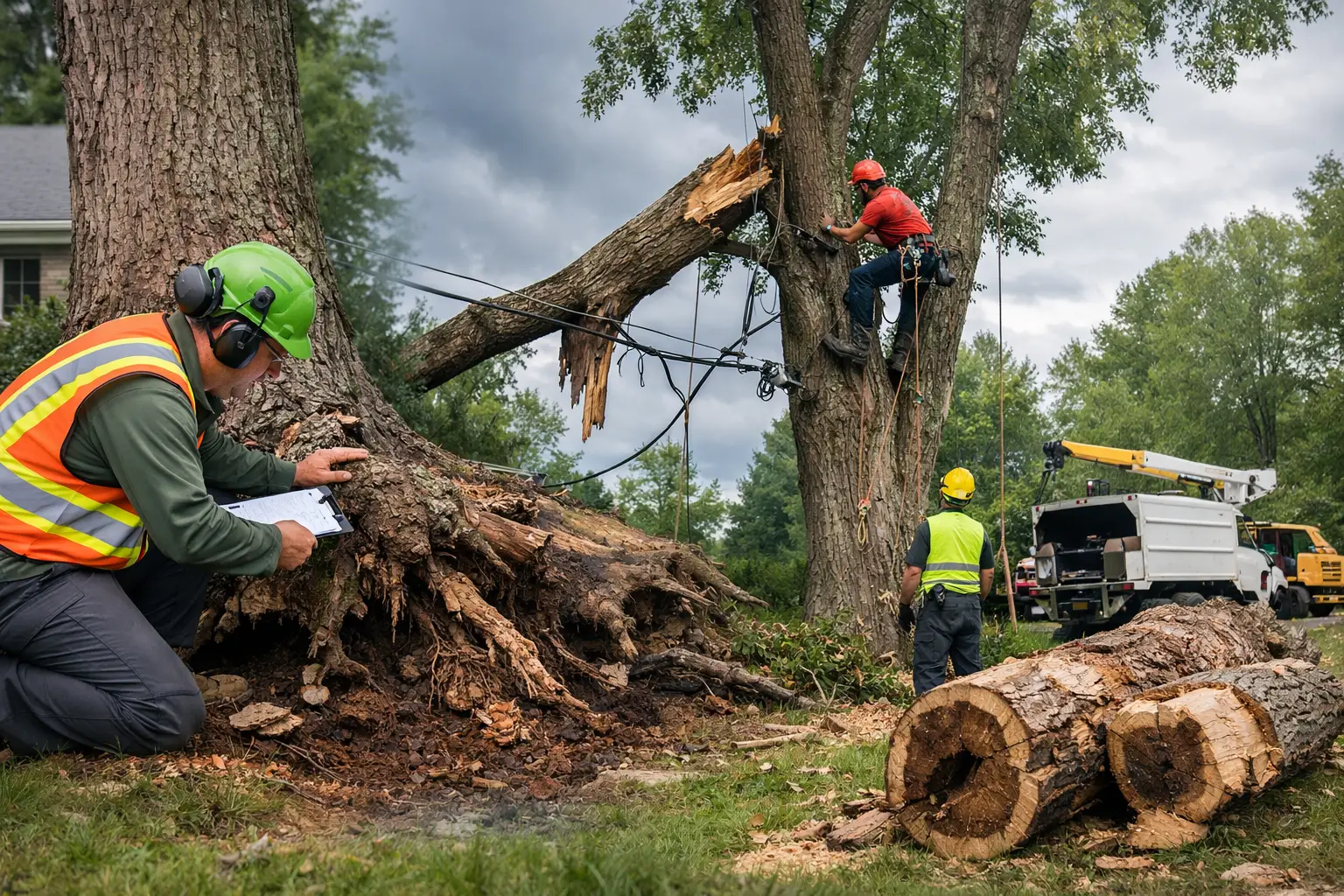
Prepare your Trees for Storms with the Right Arborist
Have you ever gone out in the storm and held your breath, in the hope that your trees would be standing firm? Storm season does not simply mean rain and winds, but it means uncertainty. To homeowners, trees can soon be transformed into deadly hazards of they are not properly prepared. Another consequence of neglect of tree management is the falling of trees, uprooting tree trunks and damaged power lines. In the event of having a professional arborist and proper preparation, then you can save your landscape, your property, and your peace of mind.
1. Why is Storm Season Challenging to Trees?
During storms, trees are very persistent, as per professional companies. Strong winds put their structures to the test, rains destroy the soil stability, and lightning may bring internal damage, which are not always evident immediately. Healthy trees might even be unhealthy as is evidenced by the weak union of the branches, rotting inside, or even having shallow root systems, making them susceptible to extreme weather conditions.
The damage by storm is not always instantaneous. Other times, an old tree may withstand the storm, but it gets cracks, crooked trunks, or strained root,s which get worse with time. That is why it is much better to be prepared than to clean up.
2. Inspecting Your Trees Before
There must be a start with observation. Get time to examine your trees. Are the trees dead or hanging? Is there signs of cracking of the trunk, peeling bark or fungus about the base? Trees which slant more than normal or have bare roots might be already affected.
Special care should be given to mature trees, particularly near houses, driveways, power cords, etc. Homeowners are able to observe apparent problems; however, a number of structural vulnerabilities can be identified only by professionals. Late damage and emergency removals could cost a lot, which could be prevented by early assessment.
3. Strategic Pruning
It is also known that proper pruning is one of the most useful storm-prep methods. It renders the canopy weaker to the wind as it allows the air to pass through the canopy instead of blowing against the canopy. Cutting of dead, diseased or crossing branches also contributes to the avoidance of breakages during high wind.
Nevertheless, excessive pruning might be as detrimental as not pruning. Too much canopy cover removes the trees making them susceptible to stress. Professional knowledge comes in here. A trained arborist knows how to find the balance between safety and the well-being of the trees, and thus you have healthy trees as opposed to weak ones.
4. Root Stability and Soil Health
There is no storm preparation on the ground. Storm-resistant trees are based on healthy roots. Poor drainage, constricted soil, and construction intrusion may affect the root systems weakening trees that are more inclined to fall when the soil is saturated.
The stability can be enhanced by improving the soil condition, the application of mulch and solving the problem of drainage. Arborists are usually known to evaluate root zones, and provide solutions to the same that may be overlooked by the home owners, particularly where there is a tendency of heavy rainfall.
5. Tree Removal When Needed
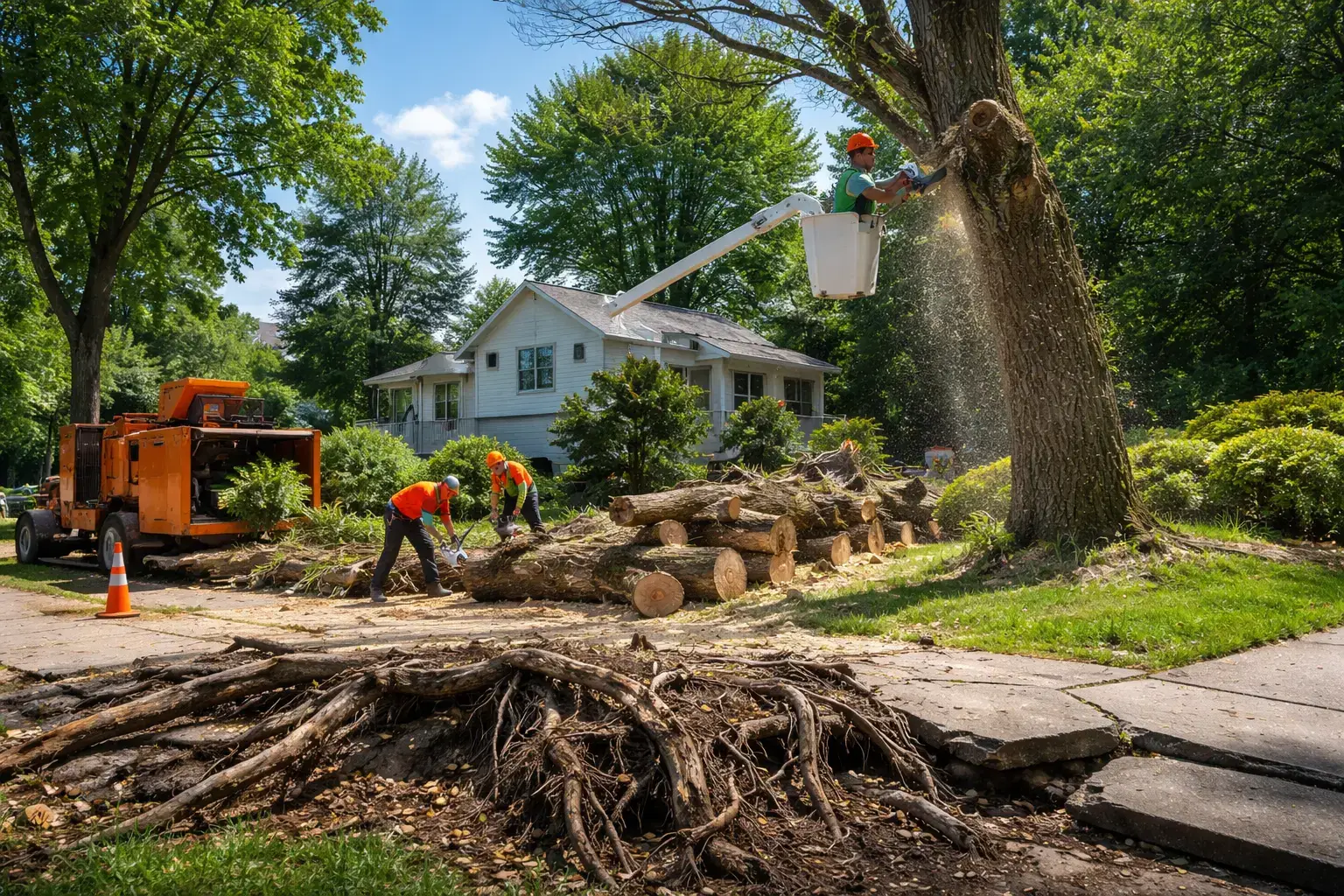
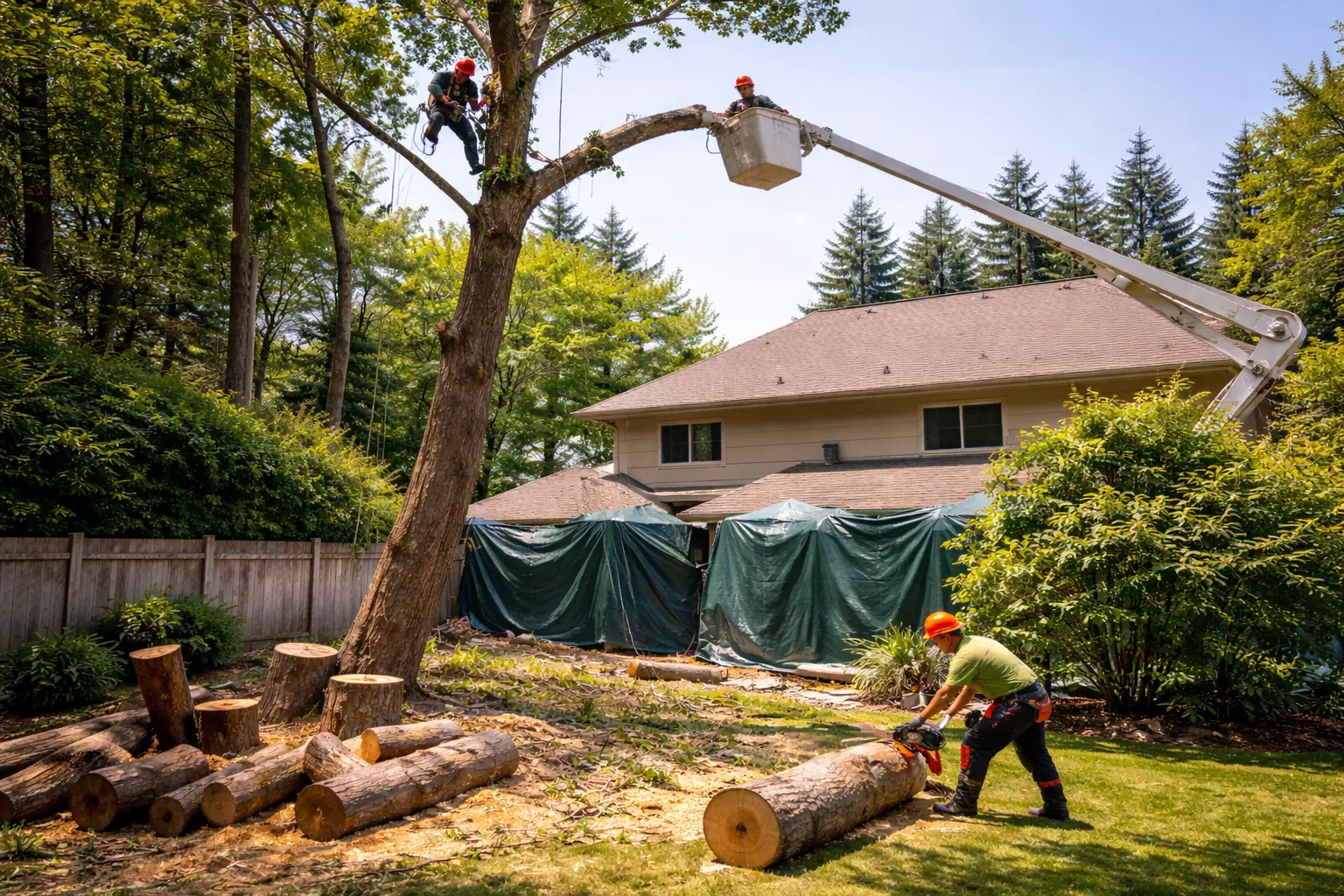
The best is sometimes doing away with it. The already dead trees, highly diseased and structurally unsound trees are very dangerous in a storm. Dealing with such trees after a storm usually results in emergency cases, increased expenses, and increased risk. For additional background information on safe and necessary tree removal practices, a detailed reference can be found here.
With the assistance of a professional arborist, you may decide whether the condition of the tree is so problematic that it should be removed or whether there are other ways to save the tree, while mitigating the risk, i.e. cabling or bracing.
6. Selecting the Right Arborist for Preparation
Storm season is no time to gamble and not any tree service can be trusted. The right arborist carries along with him or her a blend of knowledge, experience and accountability. Find certified, insured, and trained professionals on the current arboricultural practice.
A good arborist does not make quick decisions. They evaluate and analyze your property, discuss possible risks and give unequivocal advice depending on your landscape. Openness, safety requirements, and long-term tree health are the major signs of quality service.
7. The Significance of the Emergency Planning
Storms do not necessarily result in harm even with preparation. A reliable arborist can be contacted before it is too late and avoid stress and time wastage. There are numerous trusted specialists that offer emergency response services and they can afford to give priority to clients that have already taken up precautionary measures.
The knowledge of whom to contact in case of a tree that blocks access to places, or threatens building, is what can be very crucial during times of high pressure.
8. Long-Term Storm Preparedness of Storm-Ready Trees
Trees that have been storm prepared are not merely going to be spared damage, but they also retain their value. Well-cared for trees are known to improve curb appeal, boost property value, shield and offer environmental advantages even throughout the entire year.
Professional treatment will guarantee your trees become stronger with time and each of the storm seasons will be less challenging than the previous one. When properly done, prevention will always be cheaper and less stressful compared to repair.
Conclusion
The storm season does not necessarily have to be a cause of anxiety, as highlighted by the expert team. Your landscape can withstand the tough weather with a lot of confidence with proper planning of the trees, careful attention to trees, and having the correct arborist. Trees are assets that people can invest in today and would be safe, beautiful, and stable even decades to come.
When you do not know where to start, it will be the ideal time to hire a professional arborist and provide your trees with the required strength before they can be affected by the next storm.