Large Trees Removal Without Risking Your Property
Have you ever wondered in your yard, looking at a big tree, and you are asking yourself, is it safe to take this and not destroy it? It may be very intimidating to remove a big tree and this is particularly so when it is near your house, fences, or your landscape. A misplaced cut and you may have broken fences, broken roofs or even broken driveways.
Luckily, you can undertake this task without any danger to your property with due planning, safety measures, and expert knowledge on how to remove even large trees. This guide will discuss all the information that you will need to know when it comes to preventing expensive damage from eliminating trees.
1. Evaluate the Tree and Surroundings
The first step to the prevention of damage to the property is a careful analysis of the tree and its environment, according to the expert teams. Note the height of the tree, the branching pattern of the tree and the root size. Peep around the house and observe other buildings, garages, power lines and fences. The lean trees, hollow trees, and trees having branches that are weak are more dangerous to cut. By determining the possible hazards early, you will be able to design the safest way.
An example is a tree leaning whereby special rigging tools or several cuts can be used to regulate the fall of the tree. Beforehand, mapping out the areas that you are going is a good way of maintaining control of what is required in terms of protection.
2. Contract Removal Services
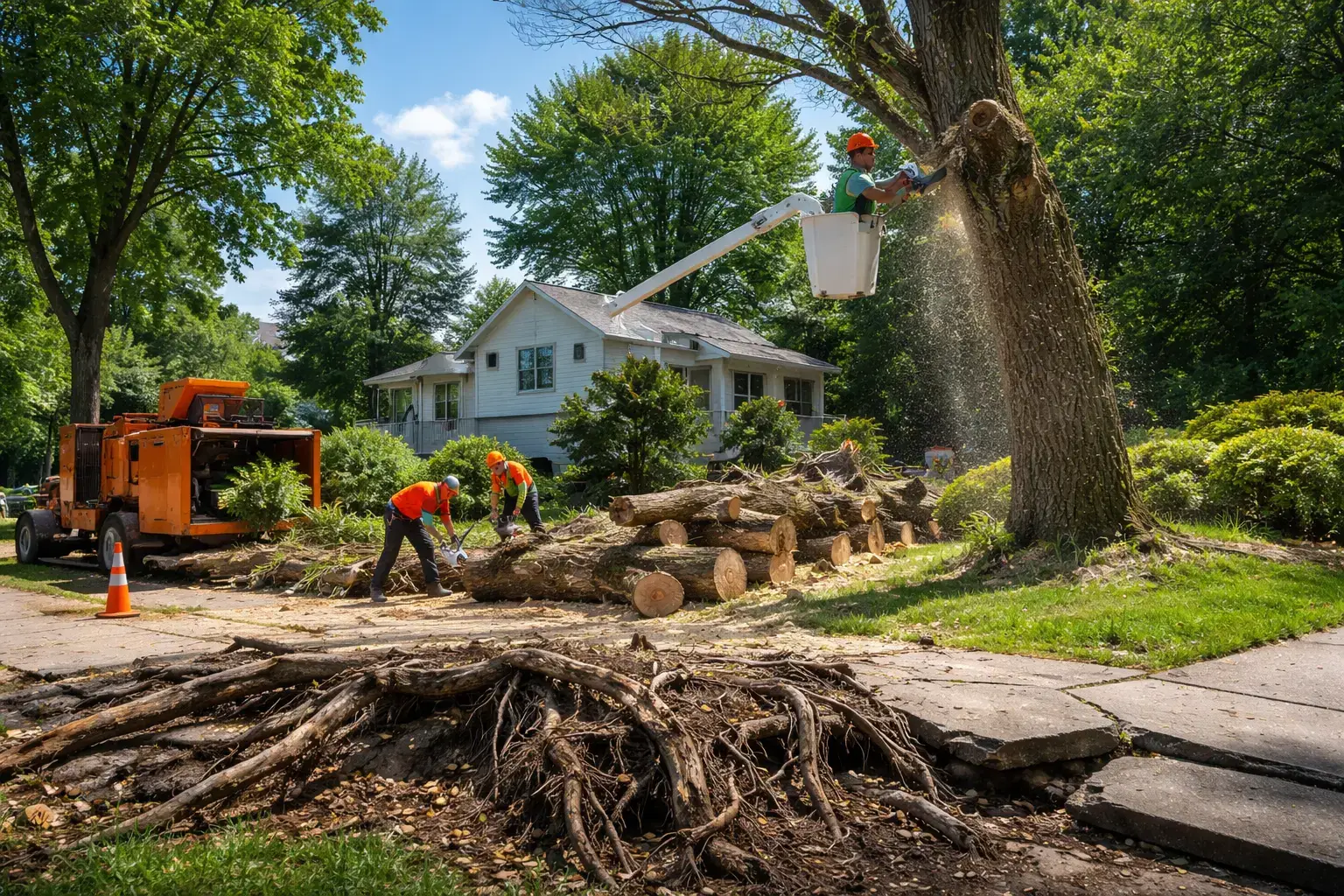
Massive trees cannot be a DIY project. Trying to take a large tree out with the help of inexpert and non-professional equipment and ideas, one may turn the process into a risk of damaging property and injuring oneself. Professional tree removal firms possess the necessary equipment in terms of chainsaws, cranes, and rigging gear as well as trained staff members able to analyse tree behaviour. Professionals are also aware of the most secure methods of cutting, such as cutting a tree into smaller subsections instead of trying to cut it in one fell swoop.
This technique can greatly cut the possibility of branches hitting buildings, fences or vehicles. The cost of getting professionals on board can save you thousands of dollars in the cost of repairs.
3. Guard Side Property
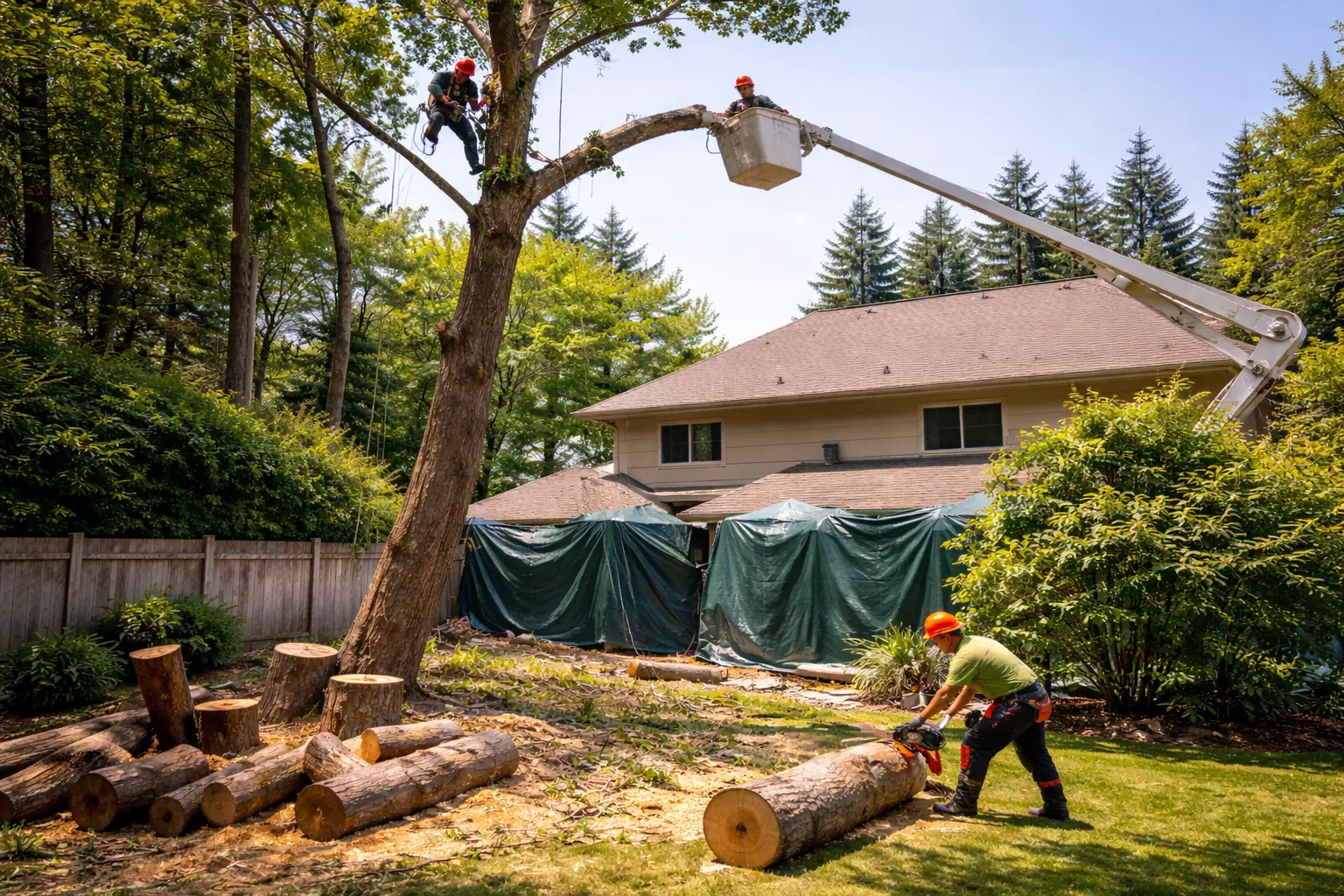
Additional precautions should be taken even in the case of professionals. Tarp, board, or shield the vulnerable landscaping, garden beds and outdoor furnishings. In case the tree is close to a driveway or a building, accidental damage can be avoided by transferring the moving vehicles and storing outdoor objects outside the premises.
In specific high-risk zones, specialists might involve loads of the use of ropes, pulleys, and cranes to regulate the path taken by falling branches and trunks. These safety measures guarantee that even big trees can be cleared without causing any damage to the adjacent homes.
4. Cull Branches Selectively
Large branches must be trimmed and cut down into bits before the trunk is removed. This lowers the weight of the tree and controls uncontrolled falls. Sectional dismantling is a method used by professionals who do not cut down the tree but rather lower the branches with the help of ropes and pulleys instead of letting them fall freely.
Strategic pruning is not only beneficial in protecting property but it also accelerates the process of removing such. It makes the tree fall in a controlled fashion and makes the working site safe for the workers and residents.
5. Check on Underground Hazards
Although the most obvious issue is above-ground damage, the roots may also be the source of property problems. Huge roots can go beneath patios, driveway or foundations. Movement of the tree may also cause cracks, movements, or slopes. Before removing the root system, professional crews actually check its root system and arrange the work according to it.
They are allowed to use special cutting or grinding apparatus so that they may not cause them long term destruction of driveways, sidewalks, or other structures.
6. Disposal and Cleanup Plan
Until such a tree is felled, branches, leaves, and sawdust may cause the destruction of property should they be left unattended. Agree with your tree removal company on the way to clear the debris removal, including chipping, hauling or even recycling the wood. The cleaning of the worksite will prevent accidental scratches, stains, or obstructions of the outdoor areas.
7. Take into Account Weather Conditions
It is essential to have safe tree removal with regard to the weather. Trees may be unpredictable due to high winds, rain or icy conditions and cause more damage to property. Wet floors make the movement of workers and machines more hazardous, and very powerful winds may make the branches move out of control. On a clear and dry day, arrangements should be made to cut the trees to ensure that the crew and your property are not harmed.
Professional crew keep an eye on weather forecasts and schedule big cuttings of trees under safe conditions, as well as can also postpone work when it is not safe. Considering the weather, you will decrease the number of accidents and will make the whole process more controlled and efficient.
Conclusion
Cutting down a huge tree does not necessarily imply the possible destruction of property. The evaluation of the tree and surroundings, hiring of professionals, security of the surrounding property, strategic pruning, assessment of underground hazards, and planning of cleanup can make the process safe and efficient. It is important to remember that large tree removal is not only about being able to cut a trunk, but it is also about planning, control and experience. These precaution measures would be beneficial in safeguarding your home, landscape and investment and your yard would be secure, clean and all set to have your next outdoor project.