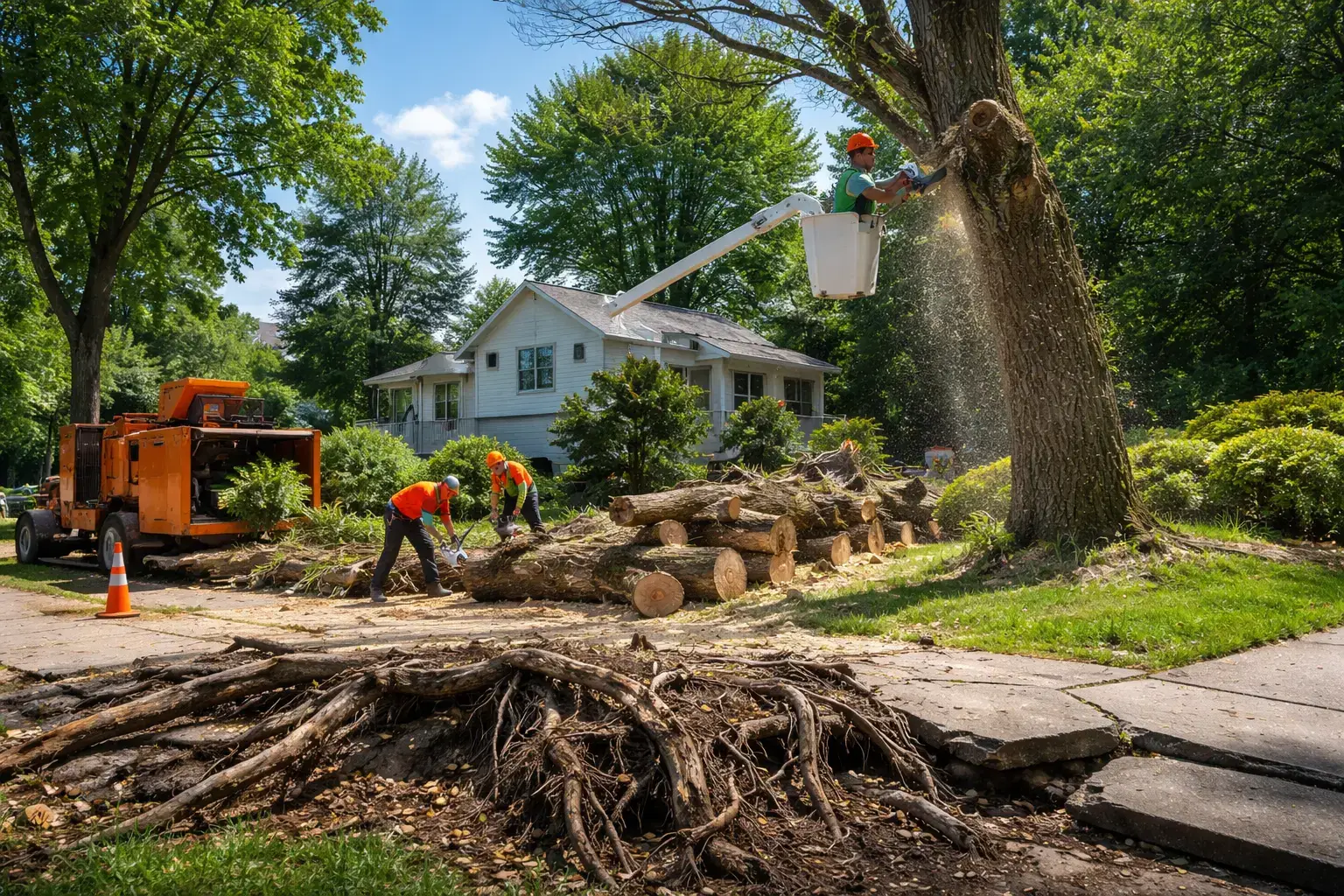
Tree Removal Vs Trimming: When Cutting A Tree Is Better
Have you ever stuck in your yard and looked at a tree and wondered whether it needs to be trimmed or if it is so old that the best thing to do is cut it down? Trees are the things that provide shade, and be of worth to a property but at times they have turned out to be more a menace than a blessing. Though regular trimming is used to keep the trees trimmed and growing in good health, there are cases in which the trimming fails to resolve the situation. The understanding of when to cut a tree rather than trim it is the key to the safety, landscape, and protection of your home.
Homeowners do not want to cut down the trees as they are attached to it or they believe that pruning will help them eliminate all the problems. Nevertheless, certain trees may grow old and therefore become structurally unstable, diseased or dangerous. Removal is usually the most appropriate and secure way out in this situation. We shall examine the most important instances when a tree is supposed to be cut out rather than merely pruned.
1. The Tree Is Dead or Dying
A dead or a seriously deteriorating tree is one of the tell-tale signs that the tree must be removed, as per professional team. The dead trees lose their structural stability and they may fall down at any time and mostly during storms or heavy winds.
Some indications that a tree is dead or dying include:
- Massive leaflessness during periods of growth.
- Brittle or falling branches
- Cracks in the trunk
- Peeling or missing bark
- Growth of fungi in the base of the tree.
Even though trimming can be used to remove dead branches, it is not applicable in rescuing a dead tree. The removal of the tree will help in the elimination of the risk of falling tree and in safeguarding the surrounding structures.
2. Infectious Disease Severe or Pest Infestation
Trees may be ill or infested with pests which slowly destroy their frame. In some cases, the treatment can be achieved by removing infected branches as early as possible. But once the infection has scaled out over the tree it might be the only solution to take away.
The typical warning signs are:
- Brown or chlorotic leaves.
- Oozing sap from the trunk
- Extensive insect damage
- Rotting wood
In case it is an advanced disease, the tree might not recover. Also, an infected tree may pass on the infection to other healthy trees in the area and hence the removal of the tree is a preventive action on the entire landscape.
3. Architectural Damage or Stability
Major structural damage made in trees in most cases makes them unsafe to retain. Such damage can be caused by storm, lightning, high winds or unhealthy growth patterns.
There are structural problems such as:
- Large cracks in the trunk
- Split or leaning trunks
- Weak branch unions
- Roots lifting out of the soil
Trimming can only correct some weight on the branches, but cannot correct extreme structural instability. A leaning tree with a deep crack in the trunk is very dangerous and it might need to be cut down.
4. Roots Causation of Damage of Property
Roots of trees may go deep even beyond the trunk and at times tamper with buildings or underground utilities. There will be no solution to trim the branches when the roots start destroying foundations, driveways, sidewalks, or plumbing systems.
Root symptoms indicate that there is a risk that they may cause issues, and these include:
- Broken driveways or pavements.
- Lifting concrete slabs
- Blocked sewer pipes
- Turbation of soil beneath the tree.
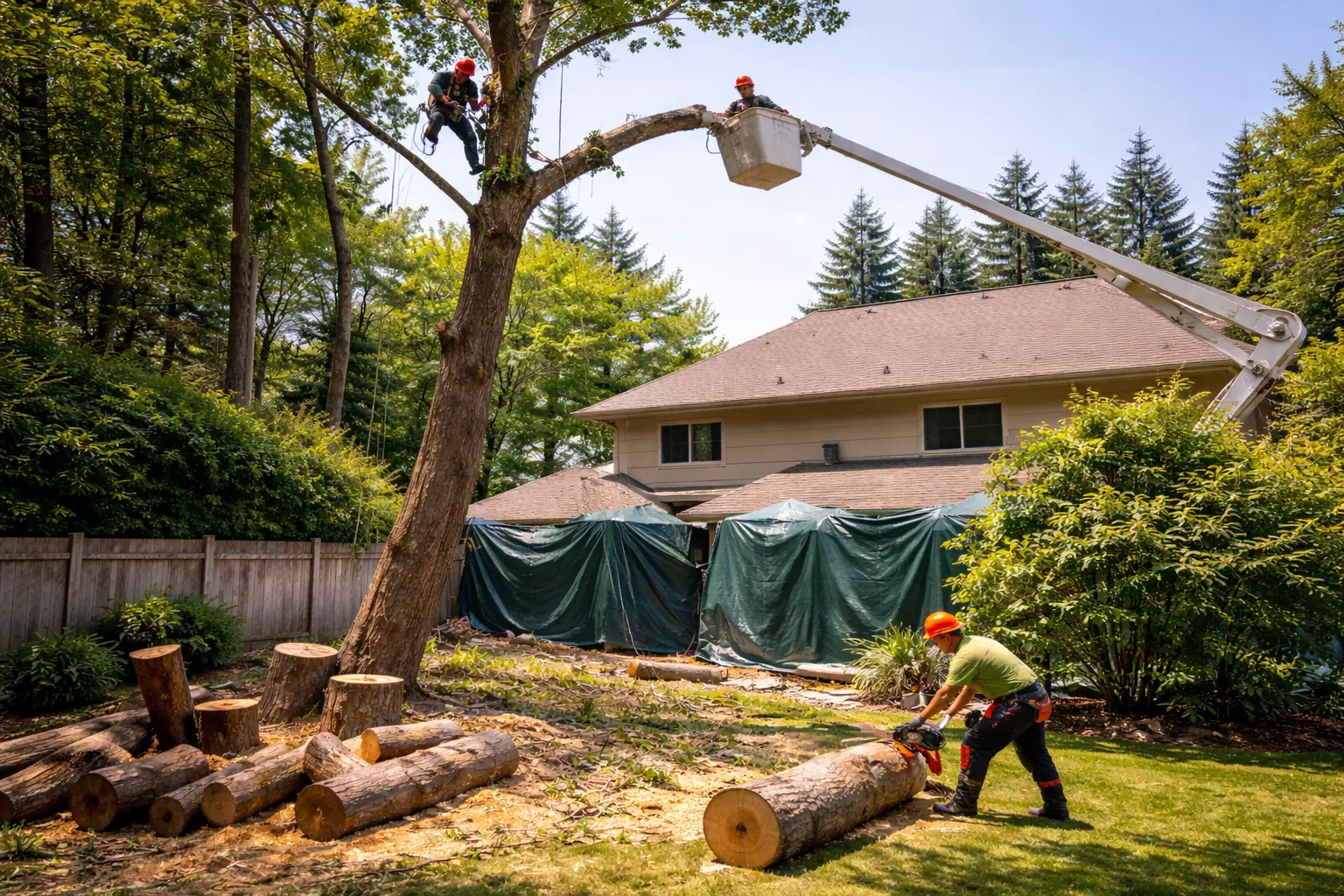
In such situations, a tree can be removed to avoid continued destruction of property and expensive repair. For large or difficult trees near buildings, it is important to understand the proper process of removing large trees safely to protect surrounding structures.
5. The Tree is Too Close to Structures
Planted trees that are too near houses, fences, or power lines may cause problems as they increase. Hanging trees can damage roofs, shade the sun or come in contact with power lines.
Whereas trimming may be used to contain the situation in the short term, it may require repetition. In case the tree grows into houses or poses some safety issues, it may be more feasible to remove it as a long-term measure.
6. The Tree Is Worn Out by Storm-damages
Extensive damages may occur to trees in case of severe storms. After heavy winds or lightning hits it is typical to have broken limbs, split trunks or even roots that are exposed.
In other instances, the removal of damaged branches may make a tree recuperate. Nevertheless, when over half of the tree is destroyed or the trunk is very weakly damaged the tree might not recover. When a tree is weak then it becomes unpredictable and can fall during the storms in future hence removal is the safest option.
7. The Tree Poses a Safety Risk
There are occasions when a tree can look healthy yet the position or state of a tree can cause danger. The trees planted close to playgrounds, walking paths or driveways may become dangerous when the branches start to fall or when the tree looks unstable.
In case the risk cannot be reduced by regular trimming, cutting the tree down will give an individual a feeling of security and eliminate possible accidents.
Conclusion
Trees are a good property that adds beauty and comfort to any given property, according to tree experts. In the majority of the cases, routine trimming is sufficient to make them healthy, handsome and secure. Nevertheless, the remediation of underlying issues like disease, structural damages or hazardous growth may not be able to be resolved by trimming.