Dry Periods: How to Help Trees Stay Healthy
Have you ever seen your trees looking very fatigued, ragged, and completely naked in long dry seasons? Drought stress is a silent killer that gradually drains the trees, and it usually takes a long time before one notices the destruction on them. As the climate pattern is shifting and the lack of rainfall is becoming the order of the day, the necessity to ensure trees do not lose moisture is no longer a choice, but a need. Trees make landscapes look good, offer shade and improve the air quality, and even mature trees may not cope under the drought conditions unless well taken care of. Let’s get into the tips as highlighted by professional teams.
1. Know About the Cause of Drought Stress
Drought stress is the state of the tree to absorb water to satisfy its basic needs. Water is an essential component in carrying nutrients to the body, cell integrity and photosynthesis. Roots which lack sufficient soil moisture cannot perform well, resulting in poor growth and general deterioration. The initial symptoms are usually a shrivelling of leaves, yellowing, loss of leaves, and reduced new growth, which is of a smaller size than usual. In the long run, the stress may expose trees to the vulnerability of pests, diseases and structural vulnerability.
2. The Importance of Intensive and Frequent Watering
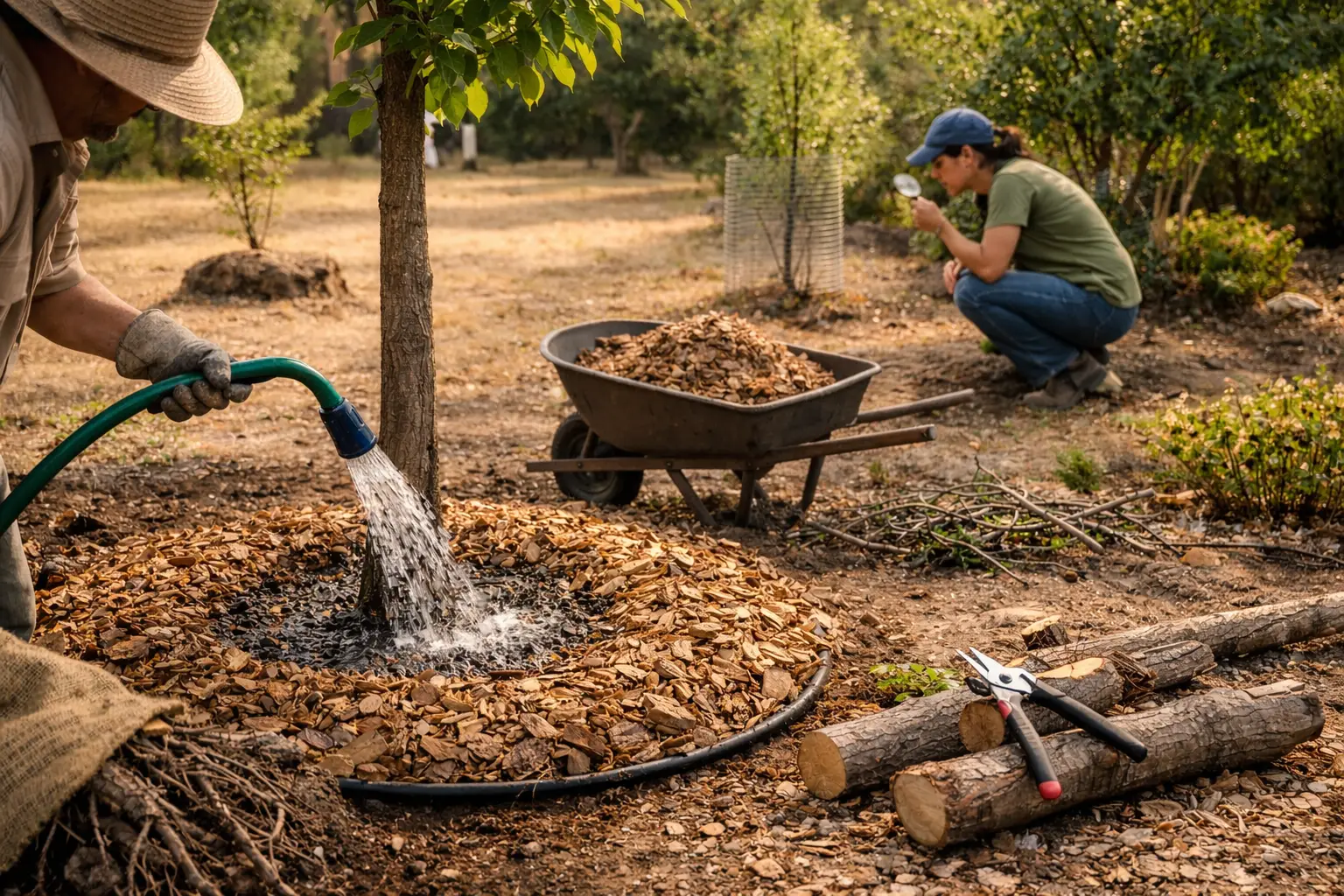
Watering of trees is one of the most effective ways of preserving trees during dry seasons. Light, water-frequenting will make the mentioned surface soil wet, but roots will be kept close to the surface where the moisture will evaporate more quickly. Deep watering on the other hand, provides time to the deeper root zones and this will encourage stronger and drought-resistant root systems. Slow and prolonged watering will aid the soil to absorb the moisture at a gradual pace and reduce water run-offs and los,s and maximise the profits to the tree.
3. Mulching to Keep the Soil Moist
The use of mulching is an easy but effective way of alleviating drought stress. An organic layer at the roots of a tree allows for control of the soil temperature, and evaporation is minimized greatly. It also enhances the structure of the soil in the long run and avoids the growth of the weed that consumes scarce moisture. It is also important to maintain mulch a few centimetres off the trunk to prevent the problem of rot and pests. The mulch, when used properly, serves as a blanket that holds long term health of trees.
4. Moisture Management and Soil Health
Good soil is a significant factor in the ability of trees to withstand drought. Poor or compacted soil inhibits the growth of roots and absorption of water. Enhanced soil structure with the help of organic matter enables the balance of water retention and drainage. The aerated soil also helps the roots to reach the moisture and oxygen easily. The process of soil enrichment over a long duration produces a favourable environment in which trees would be able to survive even during dry seasons.
5. Pruning in the Dry Seasons
When there is a drought, pruning should be taken in moderation. By pruning dead or broken branches, energy is saved, and unnecessary loss of water is prevented. Nevertheless, over-pruning may lead to more stress because this may expose more surface areas to heat and sunlight. Strategic, minimal pruning is aimed at maintaining equilibrium in support of the capacity of the tree to handle the limited resources. Pruning must be properly timed and carried out in a proper way that will make it a supportive measure instead of a burden.
6. Selecting Drought-Tolerant Tree Species
Prevention is not necessarily easier than a cure. Drought stress can be significantly reduced by planting species of trees that will respond natively to the dry conditions. There are native trees, and the ones that people believe to be appropriate to the climate consume less water once planted and usually outlive extended dry periods. The species possess a superior root system and are more adapted to the local soil and wet conditions, thus are long-term viable environmentally.
7. Roots Protection Against Heat and Damage
Roots of trees are very sensitive to heat and mechanical shaking, as per expert staff. Under drought conditions, the roots that are exposed may dry up, and they may be damaged permanently. Foot traffic, heavy equipment and excessive heat are some of the activities that damage the root zone, and this is something to protect to retain moisture levels. The shade provided by the adjacent vegetation or soil cover can also lower the soil temperature and the amount of water lost, and stress on the tree decreases even more.
8. Surveillance and Prevention
Frequent monitoring plays an important role in avoiding serious drought destruction. Minor stress indicators, such as a decrease in the rate of growth, wavy leaves, or premature loss of leaves, may be indicators of early stress. By taking action early enough to deal with these signs, the condition can be corrected before it deteriorates. Even changing watering times, mulch or soil conditions at the appropriate time can contribute a lot to the recovery.
Conclusion
Consciousness, regularity, and careful attention are needed to protect trees against droughts. With this knowledge on the impact of water shortage on trees and action based on the actionable plans, you can make sure that trees can stay healthy despite the hard times. Drought resilience is based on strong roots, quality soil and quality maintenance. Trees can still flourish with the appropriate approach to provide beauty, shade, and environmental benefit for many years to come even when rainfall is limited.